How long does it take to digest food? For most healthy adults, food can take roughly 24 to 72 hours to move all the way through the digestive tract, although the meal begins breaking down much sooner. Food typically spends about six hours moving through the stomach and small intestine, followed by up to 36 to 48 hours in the colon.
Shop Gut Balance for daily digestive support
How long does it take to digest food from start to finish?
From the first bite to elimination, the full digestive timeline is usually measured in days, not minutes. Digestion itself starts in the mouth and nutrient absorption happens mainly in the small intestine. The remaining material enters the colon, where water is absorbed and stool forms before it leaves the body. Individual timing varies.
| Digestive stage | What happens | Typical timing |
|---|---|---|
| Mouth and esophagus | Chewing, saliva, swallowing, and movement toward the stomach | Minutes |
| Stomach and small intestine | Food is mixed, broken into smaller parts, and nutrients are absorbed | About 6 hours on average |
| Large intestine | Water and minerals are absorbed while waste becomes stool | Up to 36 to 48 hours |
| Entire digestive tract | Food and waste travel from eating to elimination | Often about 24 to 72 hours |
These are estimates, not a stopwatch. The size and composition of a meal, your activity, medications, stress, and your usual bowel pattern can all affect how quickly food moves. The same person may also notice different timing from one meal to the next.
What happens during the digestive timeline?
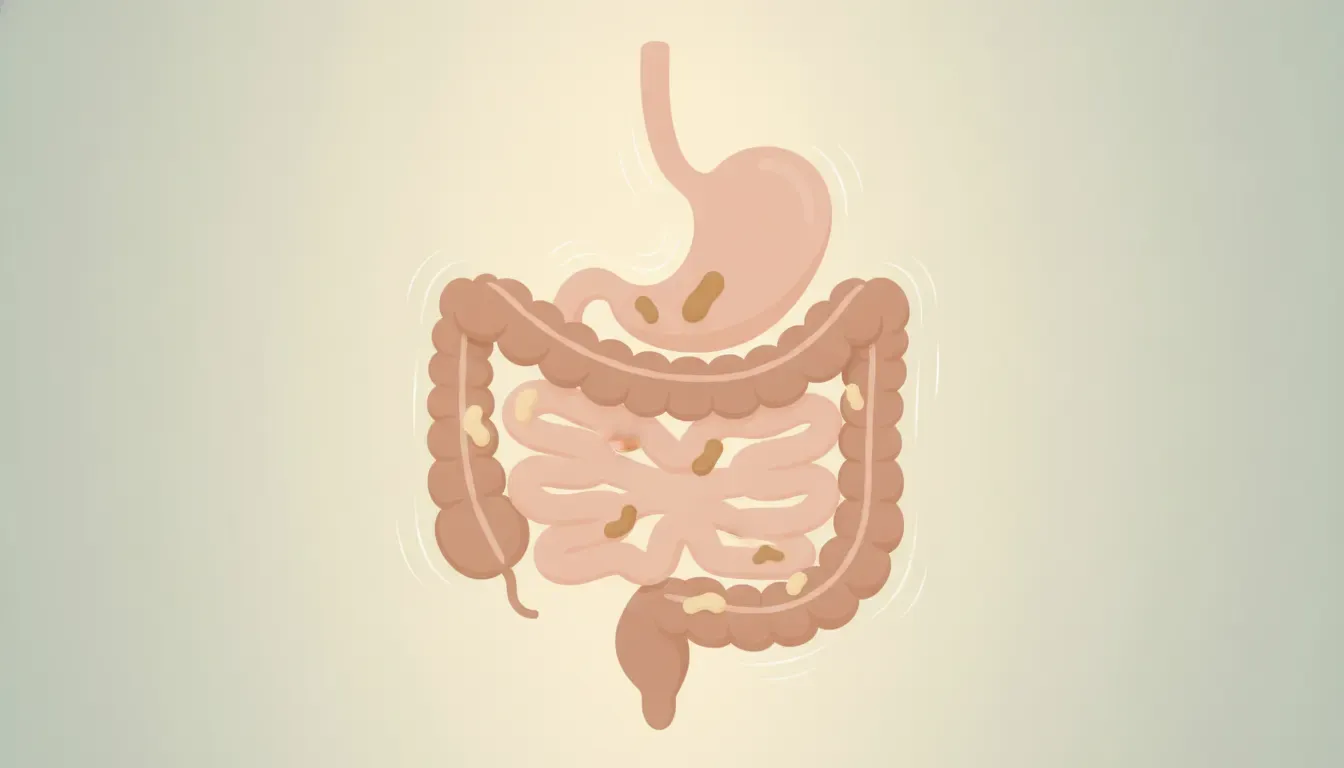
The digestive system is a connected pathway, not a single chamber where food simply sits. The mouth, esophagus, stomach, small intestine, colon, liver, pancreas, gallbladder, nerves, hormones, and gut microbes each contribute to processing food. Together, they break nutrients into forms the body can absorb and use.
1. The mouth starts digestion
Digestion begins as you chew. Chewing breaks food into smaller pieces, while saliva moistens it and begins breaking down some carbohydrates. Swallowing moves the food into the esophagus, where coordinated muscle contractions called peristalsis carry it toward the stomach.
2. The stomach mixes food into chyme
In the stomach, muscular contractions mix food with digestive fluids. This creates a semifluid mixture called chyme. The stomach releases chyme gradually rather than sending the entire meal into the small intestine at once. A denser meal with more fat or protein may remain in the stomach longer than a lighter meal.
3. The small intestine absorbs nutrients
Most nutrient absorption takes place in the small intestine. Digestive juices from the pancreas and bile from the liver help break food into smaller components. The small intestine then absorbs nutrients and water so they can move into circulation. Mayo Clinic estimates that food takes about six hours to pass through the stomach and small intestine.
4. The colon absorbs water and forms stool
Material that the body does not absorb moves into the large intestine, also called the colon. The colon absorbs water and minerals, and the remaining waste gradually becomes stool. Mayo Clinic notes that this part of the journey may take up to 36 to 48 hours. The waste then moves into the rectum and exits during a bowel movement.
Sources: National Institute of Diabetes and Digestive and Kidney Diseases overview of the digestive system and Mayo Clinic digestion timing guidance.
What factors can make digestion faster or slower?
Digestion time varies because the digestive tract responds to both the meal and the person eating it. A single slower-than-usual meal does not automatically signal a problem. Look for a persistent pattern, especially when a change in digestion comes with pain, bleeding, vomiting, or a sustained change in bowel habits.
- Meal size: A larger meal generally gives the stomach more material to process.
- Fat and protein: Denser meals may remain in the stomach longer than simple foods.
- Fiber and fluid: Fiber can support regularity, but increasing it quickly without enough fluid may cause gas or discomfort.
- Movement: Regular physical activity supports overall bowel function and may help maintain a consistent routine.
- Stress and sleep: The gut and nervous system communicate constantly, so stress and disrupted routines can affect how digestion feels.
- Medications and health conditions: Some medicines and digestive conditions can change stomach emptying or bowel transit. Ask a clinician or pharmacist about a new or persistent change.
- Your individual baseline: Age, metabolism, prior surgery, genetics, and usual bowel habits all contribute to variation.
Cleveland Clinic describes digestion timing as an estimate that depends on factors such as food type, activity, medications, age, health conditions, and stress. That is why a digestion timeline is most useful as a general guide, not a promise about exactly when one meal will leave your body.
Does the type of food change how long digestion takes?
Yes. Liquids and simple carbohydrates often leave the stomach faster because they require less mechanical and chemical processing. Meals with more fat, protein, or density can take longer. These ranges describe stomach processing, not the complete journey through the colon and out of the body.
| Food or drink pattern | General stomach estimate | Why timing may differ |
|---|---|---|
| Plain water | About 10 to 20 minutes | There is little solid material to break down |
| Simple liquids | About 20 to 40 minutes | Fluids generally move through the stomach quickly |
| Complex liquids | About 40 to 60 minutes | Protein, fiber, or fat adds more work |
| Simple carbohydrates | About 30 to 60 minutes | Structure and portion size still matter |
| Dense meals with fat or protein | About 2 to 4 hours or longer | Fat and protein can slow stomach emptying |
These estimates come from gastroenterology guidance shared by Cleveland Clinic. They should not be used to diagnose delayed stomach emptying or to decide whether a food is healthy. A balanced eating pattern, adequate fluid, and attention to your own symptoms are more useful than trying to time every meal.
What can support comfortable digestion?
There is no need to force your digestive system to work on an artificial schedule. Gentle, consistent habits can support comfort and regularity: eat slowly, chew thoroughly, drink fluids, increase fiber gradually, stay active, and pay attention to patterns that repeatedly trigger symptoms. If you want to explore a targeted gut health option, choose one with clear ingredient and quality information.
- Slow down at meals. Eating without rushing gives you time to chew well and notice fullness.
- Build fiber gradually. Add vegetables, fruits, beans, oats, or other fiber-rich foods in manageable steps instead of making a sudden large increase.
- Pair fiber with fluids. Adequate fluid helps support the movement of food and waste through the digestive tract. Individual needs vary.
- Move regularly. A walk or other activity that fits your routine can support overall digestive and bowel function.
- Notice your personal pattern. A simple food and symptom note can help you discuss recurring bloating, pain, or irregularity with a clinician.
- Consider postbiotic support thoughtfully. SecondKind's Gut Balance is designed to support digestive ease, gut balance, and regularity as part of a broader routine. It is not a substitute for evaluation of persistent symptoms.
For more practical ideas, see SecondKind's guide to improving digestion naturally and its article on daily habits that support gut health. To learn how SecondKind describes its formula, visit the BiomeBalance information page.
When should a change in digestion be checked?
Occasional variation is common, but persistent or painful changes deserve attention. Contact a health care professional if constipation does not improve with self-care, keeps returning, or comes with rectal bleeding, blood in the stool, continual abdominal pain, unexplained weight loss, vomiting, or a sudden change in bowel habits. Seek urgent care for severe or rapidly worsening symptoms.
Do not assume that a long digestion timeline explains every symptom. Bloating, early fullness, nausea, reflux, diarrhea, constipation, and abdominal pain can have many causes. A clinician can consider your history, medications, diet, and symptoms together rather than relying on a digestion-time chart.
Source: NIDDK guidance on constipation symptoms and when to seek care.
Shop Gut Balance for postbiotic gut-brain support
Frequently Asked Questions
How long does food stay in your stomach?
Timing varies, but Cleveland Clinic reports that food commonly stays in the stomach for about 40 to 120 or more minutes. Denser meals that contain more fat or protein may take longer to leave the stomach than simple carbohydrates or liquids.
How long does it take for food to reach the small intestine?
Food begins moving toward the small intestine after it is swallowed and mixed with stomach fluids. The stomach releases chyme gradually. The exact time varies by meal size and composition, so there is no single number that applies to every person.
How long does it take to fully digest food?
For many healthy adults, food and waste take roughly 24 to 72 hours to move through the digestive tract and leave the body. Mayo Clinic estimates about six hours through the stomach and small intestine, then up to 36 to 48 hours through the colon.
Does drinking water speed up digestion?
Water supports normal digestion and helps the body process food and waste, but it does not guarantee that a meal will move through faster. Plain water leaves the stomach relatively quickly, while the overall digestive timeline depends on the entire meal and your individual physiology.
Do heavier meals take longer to digest?
Often, yes. Meals with more fat or protein may remain in the stomach longer than lighter meals or simple liquids. Portion size, preparation, activity, medications, stress, and individual health also affect how a meal feels and how quickly it moves.
Is a slow digestive timeline always a problem?
No. Normal timing varies from person to person. A persistent change, severe pain, blood in the stool, rectal bleeding, repeated vomiting, unexplained weight loss, or ongoing constipation should be discussed with a health care professional.
This article is for educational purposes only and is not medical advice. Statements about dietary supplements have not been evaluated by the FDA. SecondKind products are not intended to diagnose, treat, cure, or prevent any disease. Consult a qualified health care professional about persistent symptoms, pregnancy, nursing, medications, or a medical condition.
Explore Gut Balance for a simpler postbiotic gut health routine.