If you have tried a gut health supplement and still feel unsure what it is supposed to do, the confusion is understandable. Prebiotics, probiotics, and postbiotics are related, but they are not interchangeable: one feeds beneficial microbes. One supplies live microorganisms, and one delivers the compounds or components those microbes produce.
Understanding postbiotics vs probiotics starts with the key distinction: probiotics are live microorganisms, while postbiotics are preparations of inanimate microorganisms or their components that may confer a health benefit. Prebiotics are selectively used by gut microbes and can support their activity. The best fit depends on your needs, your tolerance, and the type of support you want.
That framework makes the comparison more practical than simply asking which category is best. Start with prebiotics, the fibers that help create the conditions for a healthier microbial ecosystem.
What Are Prebiotics?
Prebiotics are nondigestible plant fibers that serve as food for beneficial microorganisms in your digestive system. Your body does not fully break them down in the small intestine. Instead, they reach the colon, where selected gut microbes can use them for energy and growth. The National Institutes of Health describes prebiotics as substrates that are selectively used by host microorganisms in ways that support health. [NIH source]
Think of prebiotics as fuel rather than living organisms. A probiotic supplement provides live microorganisms, while a prebiotic helps support the beneficial microbes that are already present. This is why the two can work together, although the right approach depends on your individual needs and tolerance.
Which foods contain prebiotics?
Many everyday plant foods provide prebiotic fibers. Common sources include:
- Garlic and onions
- Bananas
- Oats
- Asparagus
- Leeks
Adding a variety of these foods to meals can support a diverse eating pattern. This gives your existing gut microbes different types of fiber to use. Start gradually if you are not used to eating much fiber, and drink enough fluid throughout the day. A sudden increase may feel uncomfortable for some people, especially those who are sensitive to fermentable carbohydrates.
Prebiotics are one part of the larger gut health picture. To see how food-based fibers compare with live cultures and microbial preparations, explore this guide to prebiotics and postbiotics.
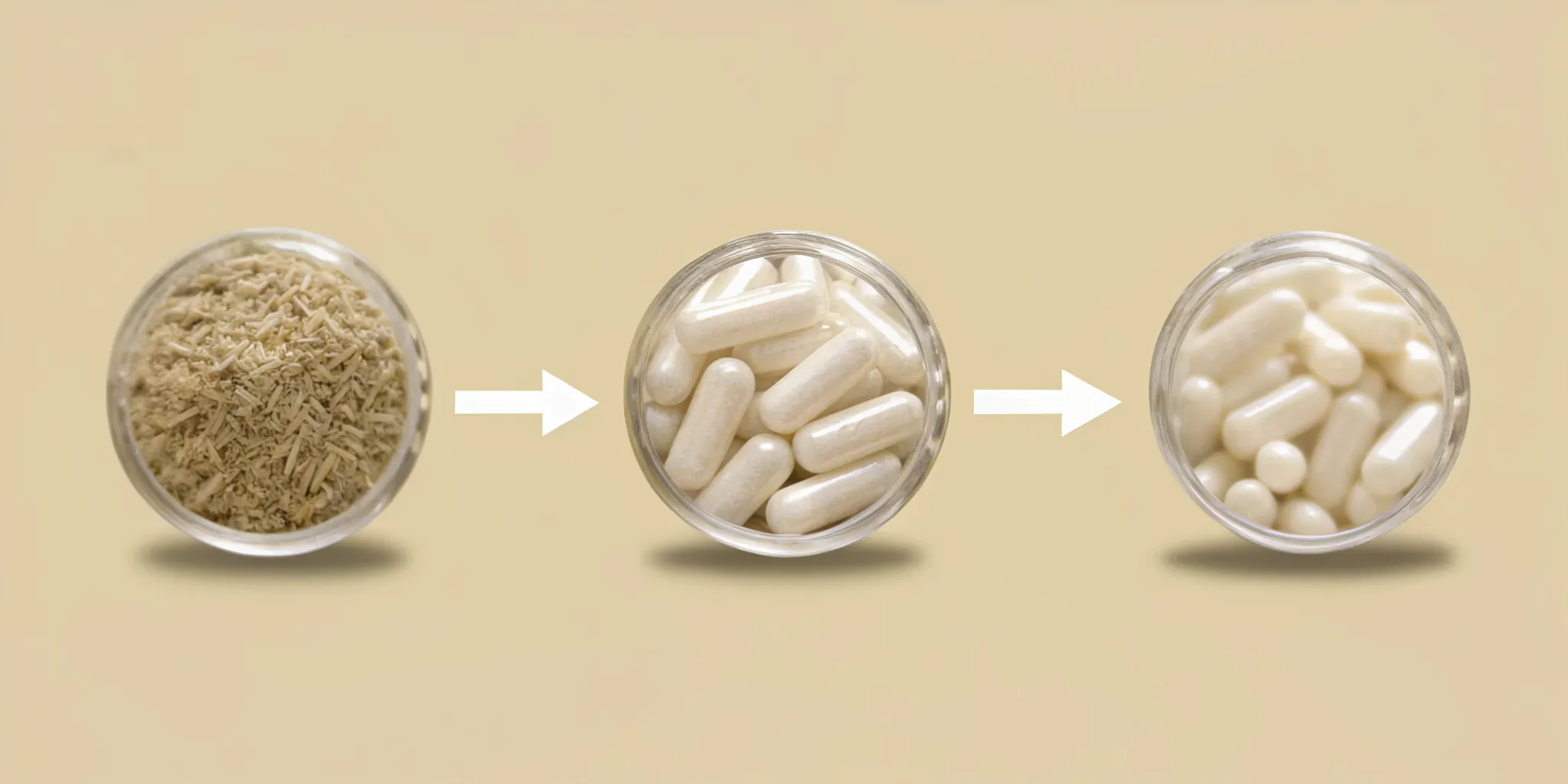
What Are Probiotics?
Probiotics are live microorganisms that, when consumed in adequate amounts, confer a health benefit on the host. The definition from the National Institutes of Health includes both beneficial bacteria and yeasts. In practical terms, a probiotic supplement delivers living strains intended to interact with the existing microbial community in your digestive tract.
How probiotic supplements are measured
Probiotic products are commonly labeled in colony-forming units, or CFUs. This measurement estimates the number of living microorganisms capable of reproducing under specific testing conditions. A higher CFU number is not automatically a better fit. The strain, formulation, dose, and reason for taking it all matter, and labels can differ widely in how clearly they explain those details.
The journey from capsule to gut
For a live microorganism to provide support, it must remain viable through storage and reach the digestive tract in an active state. It also has to withstand challenging conditions, including stomach acid. Not every strain survives that journey equally well, and a strain that passes through the gut may not establish a lasting presence there. That variable colonization is one reason people can have very different experiences with products that appear similar on the shelf.
Storage adds another practical consideration. Because probiotics contain living organisms, some formulations require refrigeration or careful temperature control to help maintain potency. Always follow the product label, especially after opening or during travel.
Food sources and the trial-and-error problem
Fermented foods can provide live cultures, including yogurt, kefir, kimchi, and sauerkraut. Their microbial content can vary based on the organisms used, fermentation process, preparation, and storage. For some people, adding these foods or trying a supplement feels simple. For others, choosing a strain, tracking the response, and repeating the process becomes another cycle of trial and error. If you have already worked through several products without consistent support, that fatigue is understandable. The next sections explain how prebiotics and postbiotics differ, including why some people may prefer an approach that does not depend on keeping live organisms active.
What Are Postbiotics and How Do They Compare?
Postbiotics are not live bacteria. They are preparations of inanimate microorganisms and their components that confer a health benefit on the host. According to the International Scientific Association for Probiotics and Prebiotics (ISAPP) definition. They can include microbial components and metabolic byproducts, such as short-chain fatty acids (SCFAs) and vitamins, created during microbial activity. Because the preparation is already in an active, usable form. It does not need to survive stomach acid or establish itself in the gut before it can begin supporting the body's normal processes.
That distinction matters when comparing postbiotics vs probiotics. Probiotics are live microorganisms that must remain active through storage and consumption, while postbiotics contain no live bacteria. The NIH explains the foundational difference between these categories in its probiotics fact sheet. Stanford Lifestyle Medicine also describes postbiotics as microbial metabolites and components, including SCFAs and vitamins, rather than living organisms.
| Consideration | Postbiotics | Probiotics |
|---|---|---|
| Stability | Generally more stable because there are no live organisms to keep viable. Many preparations are heat-stable. | Live organisms must remain active until consumption, so potency can be affected by storage conditions. |
| Mechanism | Delivers inanimate microbial cells, components, and metabolites that are ready to interact with the body. | Provides live microorganisms that must tolerate the journey through the digestive system. |
| Safety considerations | Contains no live bacteria, which may make this format worth discussing with a healthcare professional for people with sensitive immune systems. | Contains live microorganisms. Individual suitability depends on the strain, product, and person's health needs. |
| Storage | Often does not require refrigeration, making it easier to store and use consistently. | Some products require careful storage to help preserve live cultures. |
| Consistency | Can offer a more controlled, consistent delivery because the product does not depend on live organisms staying viable. | Results may vary with strain, dose, storage, and whether organisms remain viable through use. |
SecondKind's BiomeBalance is a patented postbiotic complex built around this science-first approach. For a practical guide to choosing and using postbiotic supplements, consider how stability, storage, and your own health needs fit into your routine. As with any supplement, consult a qualified healthcare professional if you have a medical condition, take medication, or have concerns about immune health.
How Prebiotics, Probiotics, and Postbiotics Work Together
Think of the gut microbiome as a living garden. Prebiotics are the food, or fertilizer, that nourishes helpful microbes. Probiotics are the workers or gardeners: live microorganisms introduced to support the microbial community. Postbiotics are the harvest, the useful compounds and components produced as microbes use their available fuel.
From fuel to beneficial compounds
Prebiotics are selectively used by microorganisms in the gut. When compatible microbes ferment these substrates, they can produce postbiotic compounds, including microbial metabolites and other components that interact with the body. This is why the three categories are connected, even though they are not interchangeable. The National Institutes of Health describes prebiotics as substrates used by host microorganisms for a health benefit. While probiotics are live microorganisms administered in adequate amounts for a health benefit. Learn more from the NIH Office of Dietary Supplements.
In a well-supported cycle, the food source helps beneficial microbes grow or remain active, and those microbes contribute to the production of postbiotics. The resulting compounds may help support the gut barrier, a healthy inflammatory response, and immune function. These effects depend on the specific fibers, microorganisms, postbiotic preparation, and individual health context, so adding more of one category is not automatically better.
Why the cycle is not always complete
A person may eat plenty of fiber but have a different microbial composition than someone else. A probiotic may also be difficult to maintain in the digestive tract, since it must remain alive through storage and consumption. Postbiotics offer a more direct option because they do not contain live microorganisms. Research describes probiotics and postbiotics as interdependent approaches rather than mutually exclusive choices, selected according to the microorganism and the needs of the person.
For a closer look at the relationship between these three tools, read our guide to prebiotics, probiotics, and postbiotics. Understanding how each contributes makes it easier to compare postbiotics vs probiotics without treating gut health as a one-size-fits-all formula.
Which Is Right for You?
There is no single best option for every gut. The practical choice depends on what you want to support. How your digestion responds to added fibers or live cultures, and how much trial and error you are willing to tolerate. Use this comparison as a starting point, not a substitute for personalized medical advice.
| Option | May fit you if you want to... | What to keep in mind |
|---|---|---|
| Prebiotics | Feed the beneficial microbes already present in your gut through specific plant fibers and whole foods. | More fiber is not always more comfortable. A sensitive digestive system may respond to a sudden increase with gas or bloating, so gradual changes can be easier to assess. |
| Probiotics | Introduce selected live microorganisms and are comfortable evaluating whether a particular strain works for you. | Live organisms must remain active until consumption and survive the digestive environment. Results can vary by strain, product, and person. The NIH explains how probiotics are defined and studied. |
| Postbiotics | Choose a stable, science-forward form of microbial support without adding live bacteria, especially after inconsistent experiences with probiotic products. | Postbiotics are preparations of inanimate microorganisms or their components. Because they do not contain live microorganisms, they can offer a more controlled approach and generally do not require the same live-culture storage considerations. They do not need prebiotic fibers to work. |
If you are tired of guessing
It is understandable to feel frustrated after rotating through products, waiting for a noticeable change. And then wondering whether the issue was the strain, the dose, storage, or your own digestion. That uncertainty does not mean you failed. It may mean the format was not a good match for your needs.
For someone with probiotic fatigue, sensitive digestion, or a preference for consistent support, a postbiotic may be the more straightforward place to begin. The SecondKind Bundle combines gut and mood support in a single postbiotic routine. Postbiotics and probiotics are not mutually exclusive; research describes them as approaches that can be selected according to the specific person and goal. Read the research overview on postbiotic definitions and selection.
Practical Ways to Support Your Gut with Prebiotics, Probiotics, and Postbiotics
A practical gut health routine does not have to rely on one ingredient or follow a complicated schedule. You can support your microbiome through food, fermented products, and a postbiotic supplement, choosing the combination that fits your digestion, preferences, and consistency.
Start with prebiotic-rich foods
Prebiotics are specialized, nondigestible substrates that are selectively used by beneficial microorganisms in the gut. In everyday terms, they provide fuel for microbes already living in your digestive system. Try adding garlic, onions, oats, bananas, asparagus, and other fiber-rich plants to meals throughout the week. Increase fiber gradually and drink enough water, especially if your current diet is low in fiber. A slower approach may be more comfortable for people who notice bloating when they make sudden dietary changes.
Add fermented foods if they work for you
Fermented foods can be a food-based way to include live microorganisms in your routine. Yogurt with active cultures, kimchi, and sauerkraut are common options. Read labels carefully, since processing and storage can affect whether live cultures remain present. If fermented foods cause discomfort or you simply do not enjoy them, they are not the only way to support your gut. Individual responses vary, so pay attention to how your body responds rather than forcing a food that does not suit you.
Consider a stable, direct postbiotic option
For people tired of trial and error, postbiotic supplements offer a different approach. Postbiotics do not contain live microorganisms, so they do not need to survive stomach acid or colonize the gut before providing their intended support. Their stability also means they generally do not require refrigeration, which can make a consistent routine easier to maintain. Research describes probiotics and postbiotics as complementary approaches that can be selected according to individual needs, rather than treating one as universally better.
SecondKind's Gut Balance and Mood Balance formulas use the patented BiomeBalance postbiotic complex. Both are made in the USA in cGMP-certified facilities and are third-party tested, Non-GMO, vegan, gluten-free, and kosher. These quality signals do not guarantee a specific result, but they provide useful information when comparing supplements and deciding what belongs in your routine.
Whichever combination you choose, introduce changes thoughtfully and speak with a qualified healthcare professional if you have a medical condition, are pregnant or nursing, or take medication. These statements have not been evaluated by the FDA. This product is not intended to diagnose, treat, cure, or prevent any disease.
Frequently Asked Questions
What is the difference between prebiotics, probiotics, and postbiotics?
Prebiotics are nondigestible fibers that feed beneficial microbes already in the gut. Probiotics are live microorganisms introduced through foods or supplements. Postbiotics are inanimate microbial cells, components, or compounds produced during microbial activity. In simple terms, prebiotics provide fuel, probiotics supply live microbes, and postbiotics provide microbial-derived compounds and components.
What is better, probiotics or postbiotics?
Neither is universally better. Probiotics may suit someone seeking specific live microbial strains, while postbiotics may be a practical option for people who prioritize stability. Consistent dosing, and a supplement that does not contain live bacteria. The best choice depends on your goals, tolerance, product quality, and guidance from a healthcare professional.
Are postbiotics better than probiotics for sensitive systems?
Postbiotics can be appealing when you want gut support without introducing live microorganisms or relying on their survival through digestion. However, sensitivity is personal, and a postbiotic is not automatically right for everyone. Start with the product directions and discuss supplement choices with a healthcare professional if you have a medical condition.
How can you get postbiotics naturally?
Your gut microbes can produce postbiotic compounds as they use nutrients from food. A varied eating pattern that includes fiber-rich plant foods, such as onions, garlic, oats, bananas, asparagus, and leeks, helps provide prebiotic fuel. Fermented foods may also contribute live microbes, but the amount and type of resulting compounds can vary.
Can you take prebiotics, probiotics, and postbiotics together?
They can complement one another: prebiotics feed existing microbes, probiotics provide live microbes, and postbiotics supply microbial components or compounds directly. Combining them is not required, though, and adding several products at once can make it difficult to identify what your body tolerates. Introduce changes gradually and ask a healthcare professional for individualized advice.
Ready to simplify your gut health?
If comparing prebiotics, probiotics, and postbiotics has left you wondering where to begin, a combined approach can make your routine easier to navigate. Shop the SecondKind Bundle for comprehensive postbiotic gut and mood support. When you are ready to get started, explore the bundle and choose a straightforward next step that fits your wellness routine.